The rising prevalence of conditions such as stroke, arthritis, and spinal cord injuries has led to 15% of the global population living with some form of disability, highlighting the urgent need for highly skilled rehabilitation specialists.
Rehabilitation, through physiotherapy, occupational therapy, and other services, plays a crucial role in determining whether individuals recover or face permanent disability. However, this field is often overlooked in many healthcare systems.
To address this gap, six universities, two from Tanzania, two from Kenya, and two from Europe will collaborate under the AfroRehab2030 project to develop and implement blended Master of Science (MSc) in Rehabilitation programs in each African country.
The participating universities include Jomo Kenyatta University of Agriculture and Technology (JKUAT), Moi University, Kilimanjaro Christian Medical Centre University (KCMC), and Muhimbili University of Health and Allied Sciences (MUHAS) from Africa, along with Western Norway University of Applied Sciences (HVL) and Arcada University from Europe.
The AfroRehab2030 project, funded by the European Union (EU), officially launched on October 1, 2024, and will run for three years. The initiative aims to strengthen East Africa’s rehabilitation workforce by incorporating innovative digital learning tools into its interdisciplinary Master’s programs.
These programs will help secure sustainable training for qualified physiotherapists, occupational therapists, prosthetists and orthotists, speech and language therapists, audiologists, and optometrists in Tanzania, Kenya, and beyond. The project is designed to promote rehabilitation services and research, responding to the World Health Organization’s (WHO) Rehabilitation 2030 Call for Action and Rehabilitation Strategies in both countries.
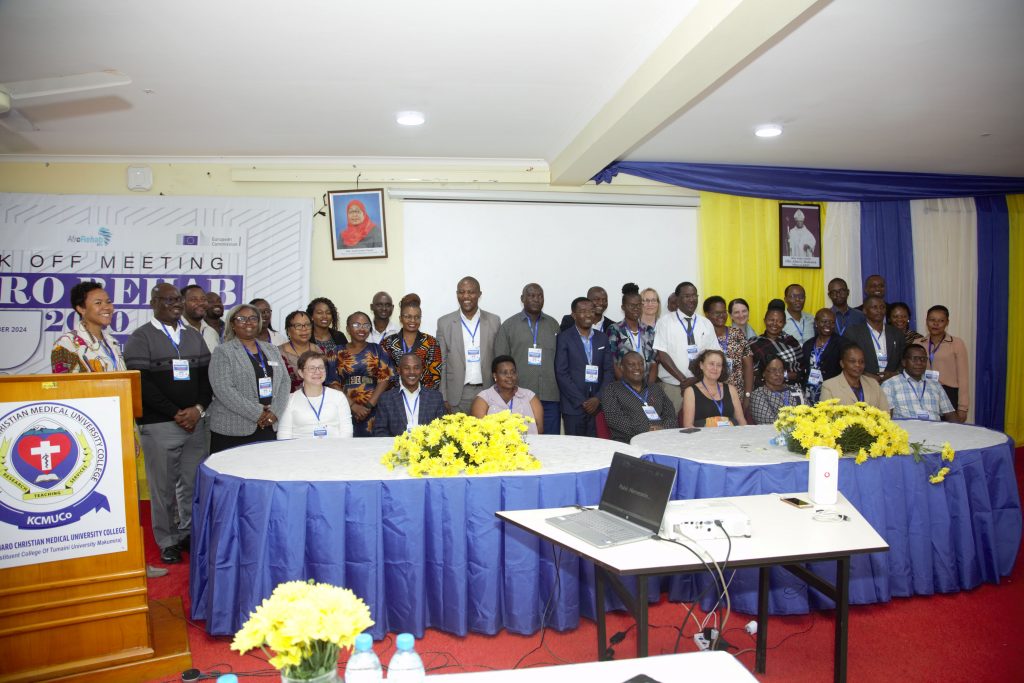
The AfroRehab2030 project held its kick-off meeting at KCMC in Moshi, Tanzania, from November 11-15, 2024. The meeting brought together key stakeholders including experts, regulatory authority leaders, healthcare professionals, and academic leaders who strategized and aligned on the project’s objectives and long-term vision.
This blended meeting, conducted both in-person and virtually, provided a platform for stakeholders to share their expertise and ensure a unified approach to developing the program’s curriculum.
In his remarks, Dr. Loishooki Saitore, Director of Training, Human Resource Development and Planning at the Ministry of Health, Tanzania, expressed strong support for the MSc programme and pledged grant support for the inaugural cohort of students.
Offering a regional perspective, Ms. Chiara Retis from the World Health Organization (WHO) Regional Office for Africa highlighted Tanzania’s efforts to strengthen rehabilitation services through a national rehabilitation strategy launched in 2021 with support from WHO and other partners. She noted that the strategy prioritizes the integration of rehabilitation data into the national health information system and the development of a workforce capable of delivering rehabilitation services across all levels of care.
Ms. Retis also pointed to the recent piloting of the Basic Package of Interventions on Rehabilitation in two regions of Tanzania, which equips primary healthcare workers with basic rehabilitation competencies while strengthening referral systems. She noted that the new Master’s programme will enhance the clinical and pedagogical skills of rehabilitation professionals in Kenya and Tanzania, helping to build more person-centred health systems
that better respond to the needs of individuals, families, and communities.
Dr. Halleluya Moshi, the Project Lead from KCMC, emphasized the importance of the program in addressing the rehabilitation workforce gap in East Africa. He highlighted that the demand for rehabilitation services is rising due to an aging population and the growing burden of non-communicable diseases, yet there remains a shortage of qualified rehabilitation professionals in the region.
“By offering this Master’s program, AfroRehab2030 is not only enhancing the skill set of healthcare professionals but also contributing to the development of sustainable healthcare systems in both Tanzania and Kenya,” Dr. Moshi said during a press interview at the meeting.
JKUAT was represented at the meeting by Dr. Mwangi Matheri, Chairman of the Department of Rehabilitative Sciences; Mr. Daniel Kariuki, Lecturer in Occupational Therapy; and Ms. Elizabeth Wangui, Corporate Communications (representing Dr. Wallace Karuguti, Lead Communication and Dissemination for AfroRehab2030).
The program will focus on practical, community-centered approaches to rehabilitation, blending modern technology with traditional healing methods to create more effective and culturally relevant treatments. This integration will allow students to learn cutting-edge techniques while considering local practices, better serving the diverse needs of the population.
Dr. Matheri, in a press interview during the meeting, reiterated that this initiative will help build local capacity, offering African scholars the opportunity to develop expertise in rehabilitation sciences while addressing local healthcare gaps.
The first cohorts of the program are projected to begin in September 2026 at Moi University in Kenya and KCMC in Tanzania.