Author: AfroRehab2030

  • Moi University and JKUAT Host Workshop on Proposed MSc in Rehabilitation Curriculum

    Moi University and JKUAT Host Workshop on Proposed MSc in Rehabilitation Curriculum

    Date: September 10, 2025
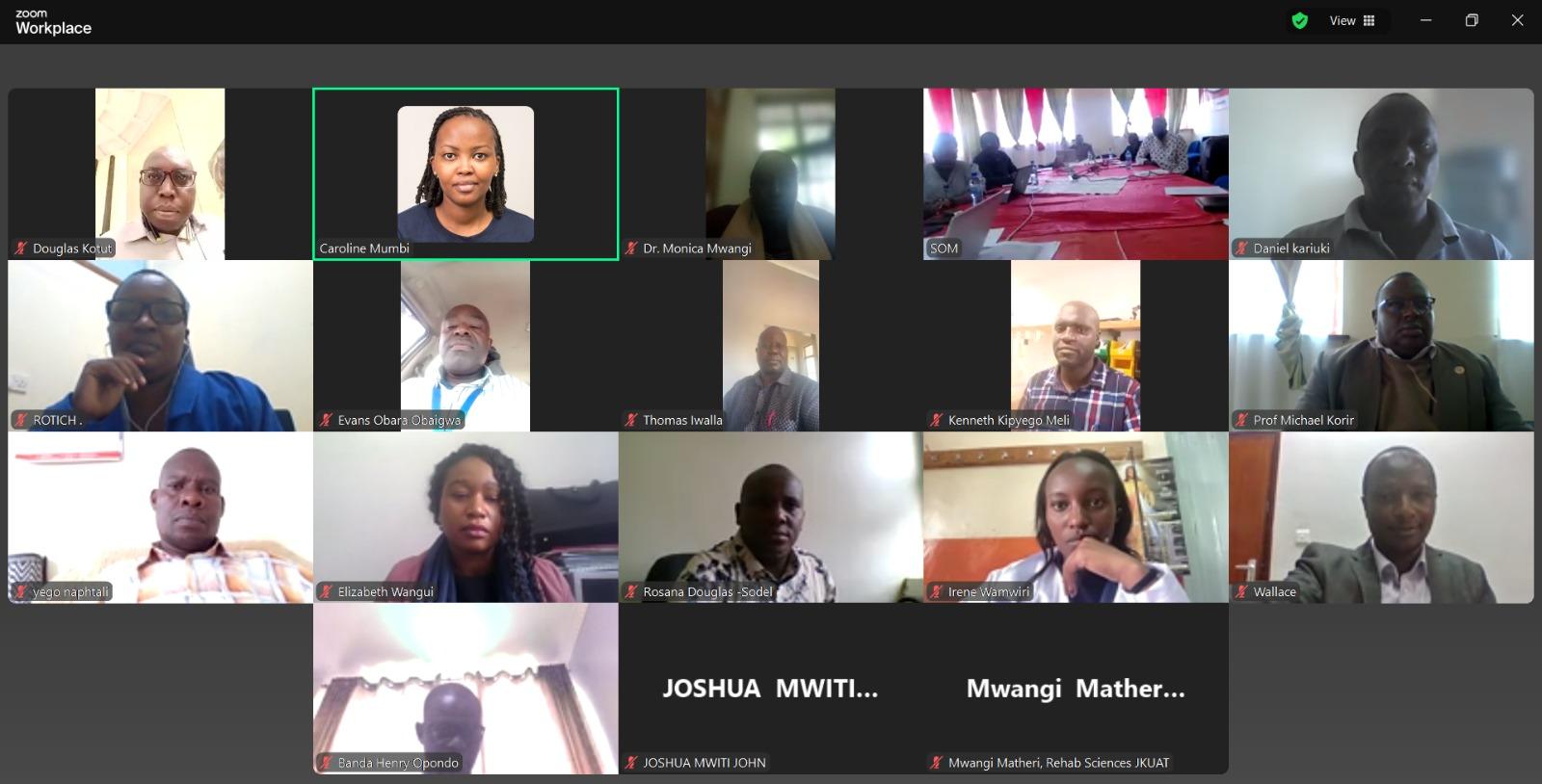
    Venue: Virtual Meeting
    Organizers: Moi University & JKUAT under AfroRehab2030 Project

    On September 10, 2025, the Departments of Rehabilitation Science at Moi University and Jomo Kenyatta University of Agriculture and Technology (JKUAT) convened a virtual workshop to review the proposed Master of Science (MSc) in Rehabilitation curriculum. The meeting further provided stakeholders with insights into the Afrorehab2030 project, a European Union-funded initiative structured around six work packages (WPs).

    Stakeholder Participation

    The session brought together representatives from:

    • Ministry of Health, Kenya
    • Kenya Society of Physiotherapists
    • Physiotherapy Council of Kenya
    • Circleg
    • Kenya Occupational Therapists’ Association (KOTA)
    • Faculty from Moi University and JKUAT

    Moi University and JKUAT are among the six partners implementing the project.

    Speaking during the meeting, Dr. Wallace Karuguti, Lead for Work Package Six (Communication and Dissemination), provided an overview of the Afrorehab2030 project. whose overarching goal is to establish a Master’s program in Rehabilitation to strengthen training and service delivery in the region.

    The participants were briefed on the process behind the curriculum development, which was preceded by conducting a needs assessment, and will also ensure to do benchmarking, stakeholder engagement, refinement, and eventual piloting before commencement.

    In this regard, Dr Karuguti, provided an overview of the needs assessment survey results which captured input from rehabilitation professionals, potential employers, service users, and other stakeholders in disability, education, social welfare, and related sectors.

    Key challenges identified from the survey included the lack of advanced or specialized skills, largely due to limited opportunities for career progression and continuous professional development. Respondents highlighted critical gaps they hoped the curriculum would address, such as digital rehabilitation and diagnostic competencies.

    The survey also revealed that most rehabilitation professionals (whose exact numbers remain unknown due to limited data) rarely venture into research or academia. The proposed MSc program aims to bridge this gap by equipping practitioners with the skills needed to advance knowledge, innovation, and practice in the field.

    The session was also addressed by Dr. Naomi Kingau, the Principal Investigator of the project from Moi University, who explained that the mode of delivery for the MSc program would be online, onsite, and blended.

    The teaching methodologies will be student-centred, community-based, collaborative, and experiential enabling students to apply theoretical knowledge in real-life clinical and community settings, thereby gaining hands-on practical skills and confidence in patient care. She also outlined the expected learning outcomes of the program.

    As presented by Dr. King’au together with Dr. Mwangi Matheri the Principal Investigator from JKUAT, the Msc Program will have several exit specializations: Optometry, Occupational Therapy, Physiotherapy, Speech and Language Pathology, Audiology, Prosthetics & Orthotics.

    The workshop further enabled participants to critique the program and share their perspectives, which will guide the project partners in refining the curriculum. Moi University and JKUAT are working together with Muhimbili University, Kilimanjaro Christian Medical University (Tanzania), Arcada University (Finland) and Western University of Applied Sciences (Norway).

    AfroRehab2030 #RehabilitationEducation #MScRehabilitation #MoiUniversity #JKUAT #HealthEquity #RehabilitationAfrica
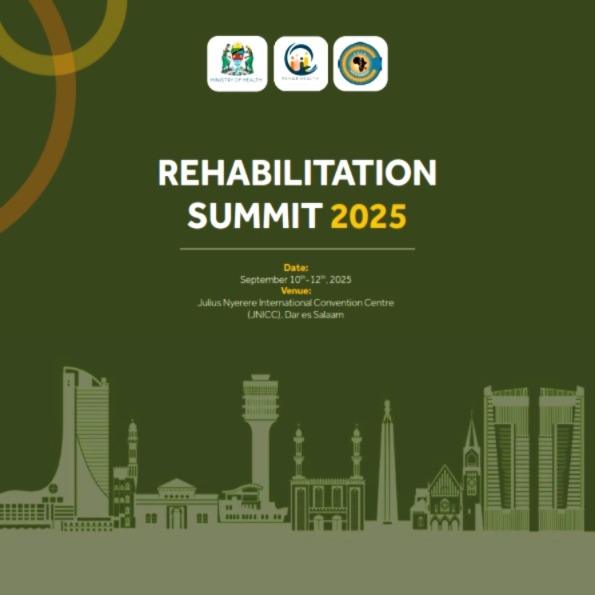
  • Rehabilitation Summit 2025: Partnership and Collaboration to Strengthen Services in Africa

    Rehabilitation Summit 2025: Partnership and Collaboration to Strengthen Services in Africa

    👉 Download the Full Rehabilitation Summit 2025 Program (PDF)

    Date: September 10–12, 2025
    Venue: Julius Nyerere International Convention Centre, Dar es Salaam, Tanzania
    Theme: “Partnership and Collaboration is Key in Strengthening Rehabilitation Service Delivery”

    The Ministry of Health – Tanzania in collaboration with the East Central
    and Southern Africa-Health Community (ECSA-HC), is proud to announce the upcoming Rehabilitation Summit 2025. This three-day event will bring together rehabilitation professionals, policymakers, researchers, and international stakeholders to explore ways of strengthening rehabilitation services across Africa. The summit will highlight the importance of partnerships, innovation, and evidence-based practices in addressing the region’s growing rehabilitation needs.


    Summit Highlights

    • Plenary Sessions with global and regional experts.
    • Workshops and Panel Discussions on digital rehabilitation, inclusive education, and women’s empowerment in healthcare.
    • Scientific Presentations showcasing cutting-edge research from across Africa.
    • Networking Opportunities connecting professionals, institutions, and policymakers.

    Program Overview

    • Day 1: Opening ceremony, keynote speeches, and high-level plenaries.
    • Day 2: Parallel workshops on rehabilitation education, technology in healthcare, and inclusive service models.
    • Day 3: Scientific paper presentations, stakeholder roundtables, and closing session.

    Why Attend?

    • Gain insights from leading rehabilitation experts.
    • Contribute to shaping the future of rehabilitation in Africa.
    • Build valuable partnerships with international institutions and NGOs.

    Download Full Program

    👉 Download the Full Rehabilitation Summit 2025 Program (PDF)

    #RehabSummit2025 #Rehabilitation #HealthEquity #PartnershipsInHealthcare #Afrorehab2030

  • First PhD in Prosthetics and Orthotics in Tanzania and Africa

    First PhD in Prosthetics and Orthotics in Tanzania and Africa

    Dr. Eunice Kombe
    PhD topic: “A mixed methods study to understand access to prosthetic and orthotic services in Tanzania”.

    Dr. Eunice Kombe is a pioneering Prosthetist-Orthotist, educator, and advocate for equitable access to rehabilitation services in Africa. She currently serves as a lecturer at the School of Rehabilitation Medicine, Department of Prosthetics and Orthotics (P&O) at KCMC University in Moshi, Tanzania. She holds a Bachelor of Science in P&O from KCMC University and a Master of Science in P&O from the University of Strathclyde in Glasgow, Scotland.

    In 2025, Dr. Kombe became the first person in Tanzania and across the African continent  to earn a PhD in Prosthetics and Orthotics, marking a historic milestone for the profession. Her PhD was undertaken at the University of Salford in Manchester, United Kingdom, in collaboration with KCMC University in Tanzania.

    Her research focused on access to prosthetic and orthotic services in Tanzania, employing a mixed-methods approach that included a qualitative metasynthesis, secondary analysis of hospital data, and in-depth interviews with clinicians and service users. The study provided a comprehensive understanding of the structural, financial, and socio-cultural barriers faced by individuals in need of assistive technology. Her work not only sheds light on long-standing inequities but also proposes actionable, context-relevant strategies to enhance service delivery, user experience, and health outcomes.

    Eunice’s path into the P&O field was deeply personal, inspired by her experience caring for her late father, Dr. Festus Kombe, who suffered a stroke and lived with mobility challenges that required assistive technology. Witnessing firsthand the impact of limited access to appropriate rehabilitation services ignited in her a strong desire to improve the quality of life for people with physical disabilities. Over more than a decade of dedicated service, she has successfully bridged academic, clinical, and entrepreneurial roles.

    She is the Founder and Director of Trucare Company Limited, a social enterprise delivering raw materials and components used to fabricate quality prosthetic and orthotic services to underserved populations in Tanzania. Under her leadership, Trucare has grown to become a model for sustainable, community-based rehabilitation service delivery.

    She has also played a leading role in research and innovation, including piloting digital prosthetic workflows that aim to increase efficiency and reduce costs. Dr. Kombe has collaborated with several international initiatives, including the UK Research and Innovation (UKRI) network and the Afrorehab project, which aim to strengthen rehabilitation systems across the continent.

    As part of the Afrorehab community, Dr. Kombe envisions an Africa where rehabilitation and assistive technology are not a privilege, but a right. She aims to contribute to policy dialogue, evidence generation, and south-south knowledge exchange that promote inclusive rehabilitation ecosystems. She is particularly committed to capacity building, nurturing the next generation of African rehabilitation professionals, and scaling up context-specific innovations that respond to local needs.

    Dr. Kombe’s journey embodies the spirit of resilience, leadership, and transformation in African rehabilitation making her a vital voice in the future of the P&O profession across the continent.

    Here is an article written my Dr. Kombe in collaboration with others.

  • AfroRehab2030 Holds Second Workshop and Launches Website at Jomo Kenyatta University of Agriculture and Technology – Kenya from March 24–28, 2025

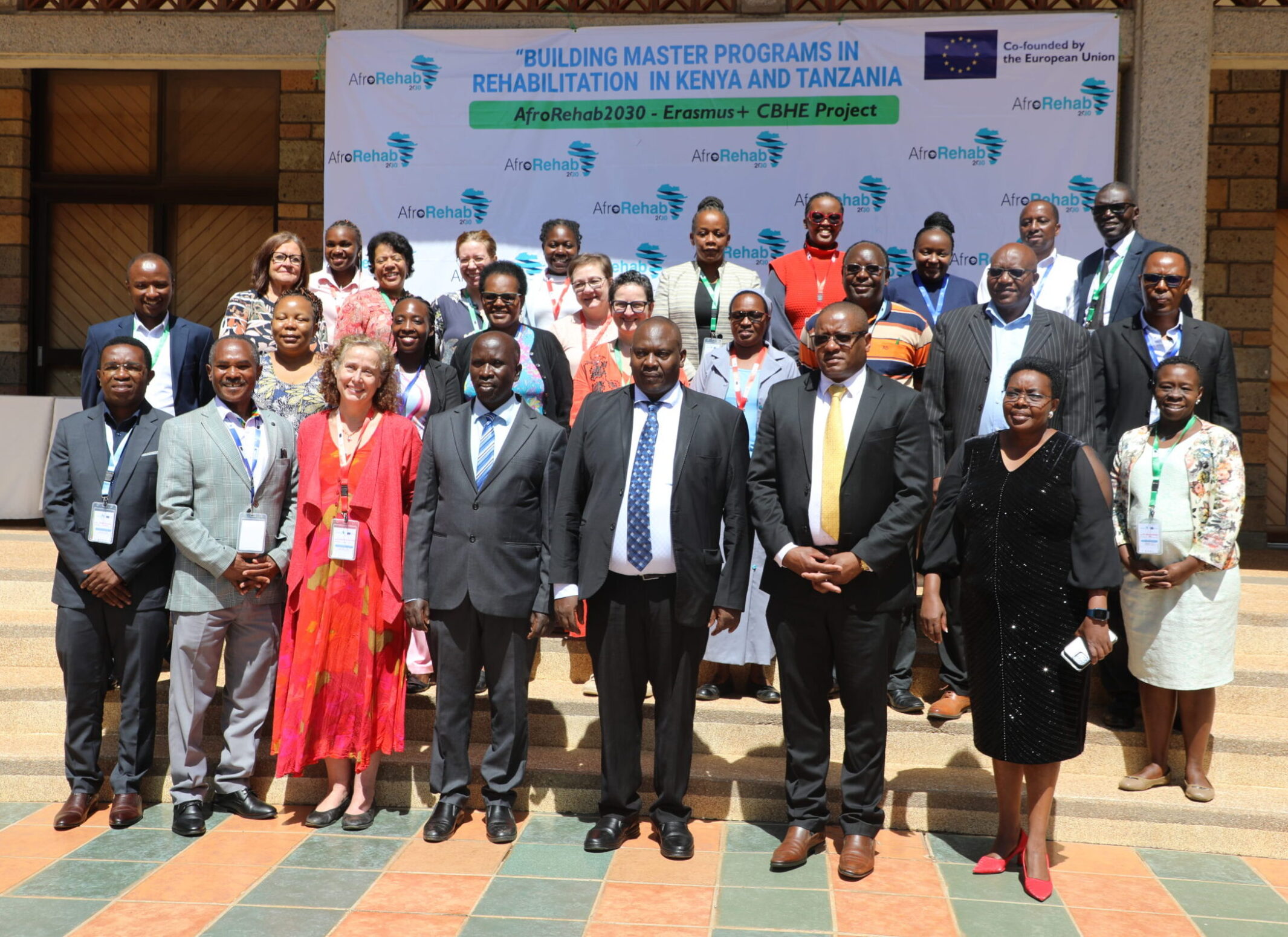
    AfroRehab2030 Holds Second Workshop and Launches Website at Jomo Kenyatta University of Agriculture and Technology – Kenya from March 24–28, 2025

  • AfroRehab2030 Project Kick- Off Meeting at Kilimanjaro Christian Medical Centre University , Moshi -Tanzania from November 11–15, 2024.

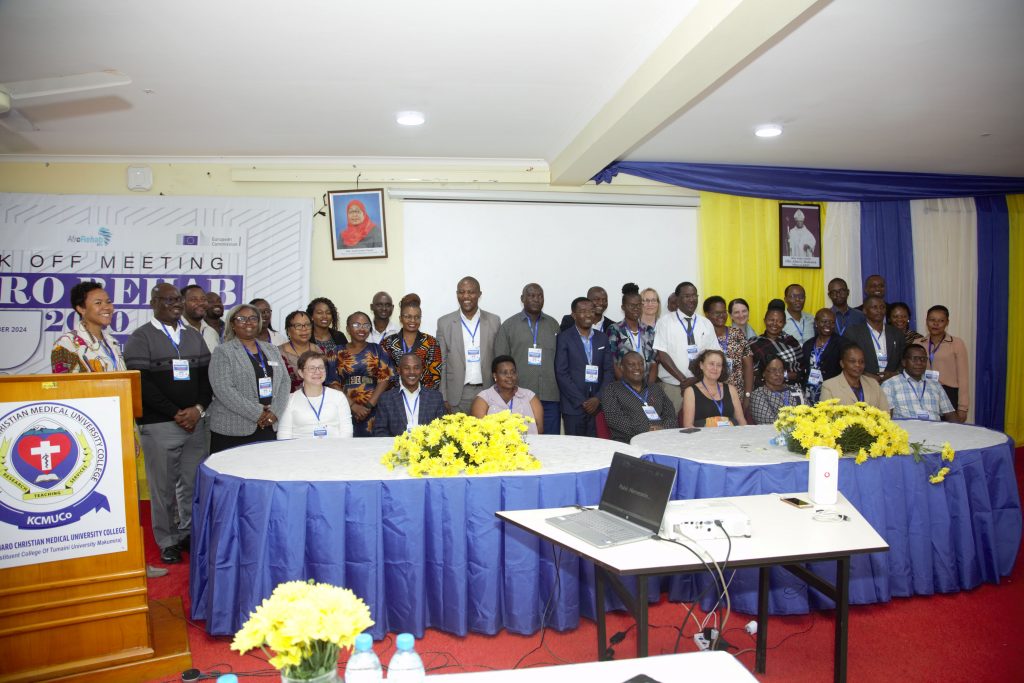
    AfroRehab2030 Project Kick- Off Meeting at Kilimanjaro Christian Medical Centre University , Moshi -Tanzania from November 11–15, 2024.

    The rising prevalence of conditions such as stroke, arthritis, and spinal cord injuries has led to 15% of the global population living with some form of disability, highlighting the urgent need for highly skilled rehabilitation specialists.

    Rehabilitation, through physiotherapy, occupational therapy, and other services, plays a crucial role in determining whether individuals recover or face permanent disability. However, this field is often overlooked in many healthcare systems.

    To address this gap, six universities, two from Tanzania, two from Kenya, and two from Europe will collaborate under the AfroRehab2030 project to develop and implement blended Master of Science (MSc) in Rehabilitation programs in each African country.

    The participating universities include Jomo Kenyatta University of Agriculture and Technology (JKUAT), Moi University, Kilimanjaro Christian Medical Centre University (KCMC), and Muhimbili University of Health and Allied Sciences (MUHAS) from Africa, along with Western Norway University of Applied Sciences (HVL) and Arcada University from Europe.

    The AfroRehab2030 project, funded by the European Union (EU), officially launched on October 1, 2024, and will run for three years. The initiative aims to strengthen East Africa’s rehabilitation workforce by incorporating innovative digital learning tools into its interdisciplinary Master’s programs.

    These programs will help secure sustainable training for qualified physiotherapists, occupational therapists, prosthetists and orthotists, speech and language therapists, audiologists, and optometrists in Tanzania, Kenya, and beyond. The project is designed to promote rehabilitation services and research, responding to the World Health Organization’s (WHO) Rehabilitation 2030 Call for Action and Rehabilitation Strategies in both countries.

    The AfroRehab2030 project held its kick-off meeting at KCMC in Moshi, Tanzania, from November 11-15, 2024. The meeting brought together key stakeholders including experts, regulatory authority leaders, healthcare professionals, and academic leaders who strategized and aligned on the project’s objectives and long-term vision.

    This blended meeting, conducted both in-person and virtually, provided a platform for stakeholders to share their expertise and ensure a unified approach to developing the program’s curriculum.

    In his remarks, Dr. Halleluya Moshi, the Project Lead from KCMC, emphasized the importance of the program in addressing the rehabilitation workforce gap in East Africa. He highlighted that the demand for rehabilitation services is rising due to an aging population and the growing burden of non-communicable diseases, yet there remains a shortage of qualified rehabilitation professionals in the region.

    “By offering this Master’s program, AfroRehab2030 is not only enhancing the skill set of healthcare professionals but also contributing to the development of sustainable healthcare systems in both Tanzania and Kenya,” Dr. Moshi said during a press interview at the meeting.

    JKUAT was represented at the meeting by Dr. Mwangi Matheri, Chairman of the Department of Rehabilitative Sciences; Mr. Daniel Kariuki, Lecturer in Occupational Therapy; and Ms. Elizabeth Wangui, Corporate Communications (representing Dr. Wallace Karuguti, Lead Communication and Dissemination for AfroRehab2030).

    The program will focus on practical, community-centered approaches to rehabilitation, blending modern technology with traditional healing methods to create more effective and culturally relevant treatments. This integration will allow students to learn cutting-edge techniques while considering local practices, better serving the diverse needs of the population.

    Dr. Matheri, in a press interview during the meeting, reiterated that this initiative will help build local capacity, offering African scholars the opportunity to develop expertise in rehabilitation sciences while addressing local healthcare gaps.

    The first cohorts of the program are projected to begin in September 2025 at Moi University in Kenya and KCMC in Tanzania.

Skip to content